Nov 3, 2025
What Vancouver Boat Owners Need to Know About Marine Electrical Systems
Your boat's electrical system is more than just a convenience. It powers your navigation lights, bilge pumps, communication equipment, and safety systems. When it fails, you are not just stranded—you are at risk.
Marine electrical problems are the second most common reason boats become disabled on the water. Worse, DC electrical systems cause more than one-third of all boat fires, with another 9 percent traced to AC shore power issues (BoatUS, 2018). In British Columbia's saltwater environment, where corrosion attacks connections year-round, the stakes are even higher.
Understanding your electrical system is not about becoming an electrician. It is about knowing what can go wrong, recognizing warning signs early, and working with qualified professionals who follow proper Canadian standards. Whether you cruise the Gulf Islands or fish the Strait of Georgia, your electrical system deserves the same attention you give your engine.
Why Marine Electrical Systems Are Different
Your car and your boat both run on 12-volt DC power, but the similarities end there. Marine environments expose electrical components to constant moisture, salt spray, vibration, and temperature swings. These conditions accelerate wear and create failure points that would never appear on land.
Electrical equipment on Canadian vessels must bear the Canadian Standards Association classification mark or meet equivalent international standards (Transport Canada, 2018). For smaller vessels, Transport Canada now accepts ABYC standards, which went into effect in October 2022 (Boating Industry Canada, 2022). These standards exist because marine electrical work requires specialized knowledge and materials that standard automotive or household wiring cannot provide.
Marine-grade wire uses tinned copper strands to resist corrosion. Connections must be sealed with heat-shrink tubing. Circuit protection must account for voltage drop over long cable runs. Every component needs proper sizing, support, and protection from the elements.
The Corrosion Problem in BC Waters
Corrosion is the silent killer of marine electrical systems. Salt water acts as an electrolyte, accelerating galvanic corrosion when dissimilar metals connect. Even boats kept in freshwater marinas face threats from humidity and condensation.
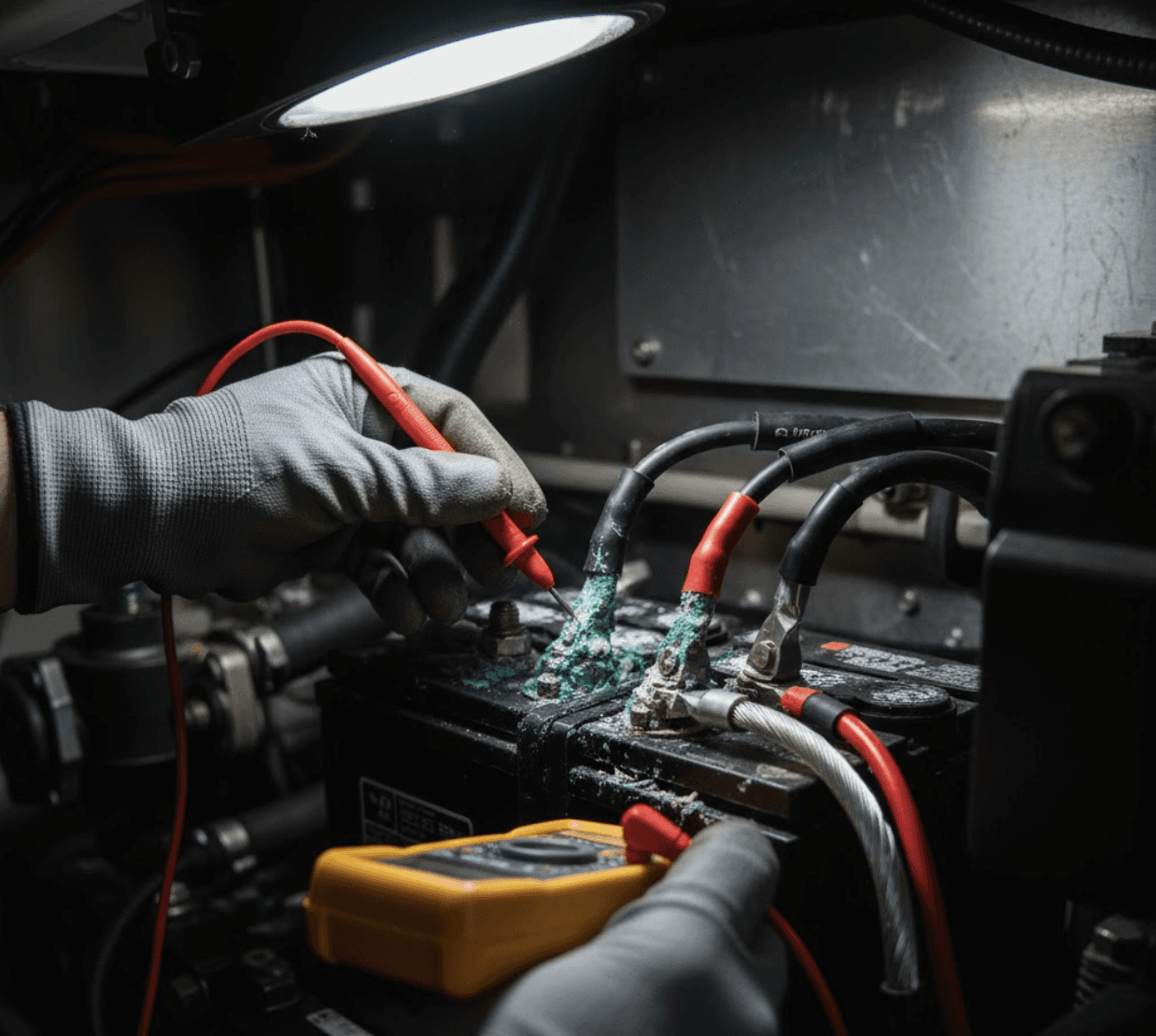
When corrosion occurs on wiring or connectors, it creates resistance that impedes electrical flow (CV Composites, 2023). This resistance generates heat, reduces performance, and increases fire risk. A corroded connection might work fine one day and fail completely the next.
Vancouver's marine environment makes this worse. Our damp coastal climate means moisture finds its way into every compartment, junction box, and wire chase. A connection that looks fine on the surface might be corroding from the inside out.
Regular inspection catches corrosion early. Look for white or green powder on terminals, discoloured wire insulation, or connections that feel warm to the touch. These are warning signs that should not be ignored.
Common Problems Boat Owners Face
The most common electrical fault is not the dramatic short circuit but the frustrating "unwanted open"—a circuit where current stops flowing because something came unplugged or a crimp failed (Boats.com). This causes intermittent problems that can be maddeningly difficult to diagnose.
Battery issues rank second. Batteries lose capacity over time, and what looks like a charging problem might actually be a dying battery giving false voltage readings. Poor connections at battery terminals create resistance that prevents proper charging and starting.
More than half of DC electrical fires start in the engine room, typically around batteries or engine-starting circuits (BoatUS, 2018). High-amperage loads create heat. Add oil residue, fuel vapours, or accumulated dirt, and you have conditions for disaster. Regular engine room inspections should include checking for loose connections, chafed wiring, and proper cable support.
Shore power problems affect boats that stay connected at the dock. Corroded shore power connections can overheat and cause fires even when nobody is aboard. Using proper marine-grade shore power cords and inspecting them regularly prevents most dock-side electrical fires.
Why Qualified Marine Electricians Matter
Marine electrical work requires specialized training. The Red Seal Program sets national standards for tradespeople in Canada, and Red Seal certified electricians have met rigorous testing standards recognized across all provinces (Employment and Social Development Canada).
For marine work specifically, electricians need additional certifications. ABYC Marine Electrical Certification and NMEA credentials demonstrate specialized marine knowledge. These certifications cover unique challenges like proper grounding systems, ignition protection in gasoline engine spaces, and corrosion prevention techniques.
BC's recreational boating industry contributes 1.3 billion dollars to the provincial economy and employs nearly 17,000 people (BCBusiness, 2018). This industry depends on skilled marine trades professionals who understand the specific requirements of vessels operating in our waters.
When choosing a marine electrician, ask about their certifications. Red Seal endorsement shows they meet national standards. ABYC and NMEA certifications prove marine-specific expertise. Experience with your boat type matters too—the electrical systems on a sailboat differ significantly from those on a powerboat.
Key Takeaways
Marine electrical systems demand respect. Regular professional inspections catch problems before they become emergencies. Working with qualified, certified marine electricians ensures repairs meet Transport Canada standards and industry best practices.
Your electrical system keeps you safe on the water. Invest in proper maintenance, use marine-grade components, and never compromise on professional expertise. In BC's challenging marine environment, quality electrical work is not optional—it is essential.
Summary: Essential Points for Vancouver Boat Owners
Marine electrical fires account for over 40 percent of all boat fires, making electrical system maintenance critical for safety (BoatUS, 2018).
Transport Canada requires CSA-certified equipment or equivalent international standards, with ABYC standards accepted for smaller vessels since October 2022 (Transport Canada, 2018).
Corrosion from BC's saltwater environment creates resistance in connections, leading to heat buildup and potential fire hazards (CV Composites, 2023).
Red Seal certified electricians with marine-specific credentials ensure work meets national standards and industry best practices (Employment and Social Development Canada).
Regular professional inspections prevent the majority of electrical problems and catch warning signs before systems fail.
Continue Reading
Explore ideas, trends, and behind-the-scenes stories from our studio.