Nov 3, 2025
How Gyroscopic Stabilizers Transform Your Boating Experience: A Complete Guide for BC Yacht Owners
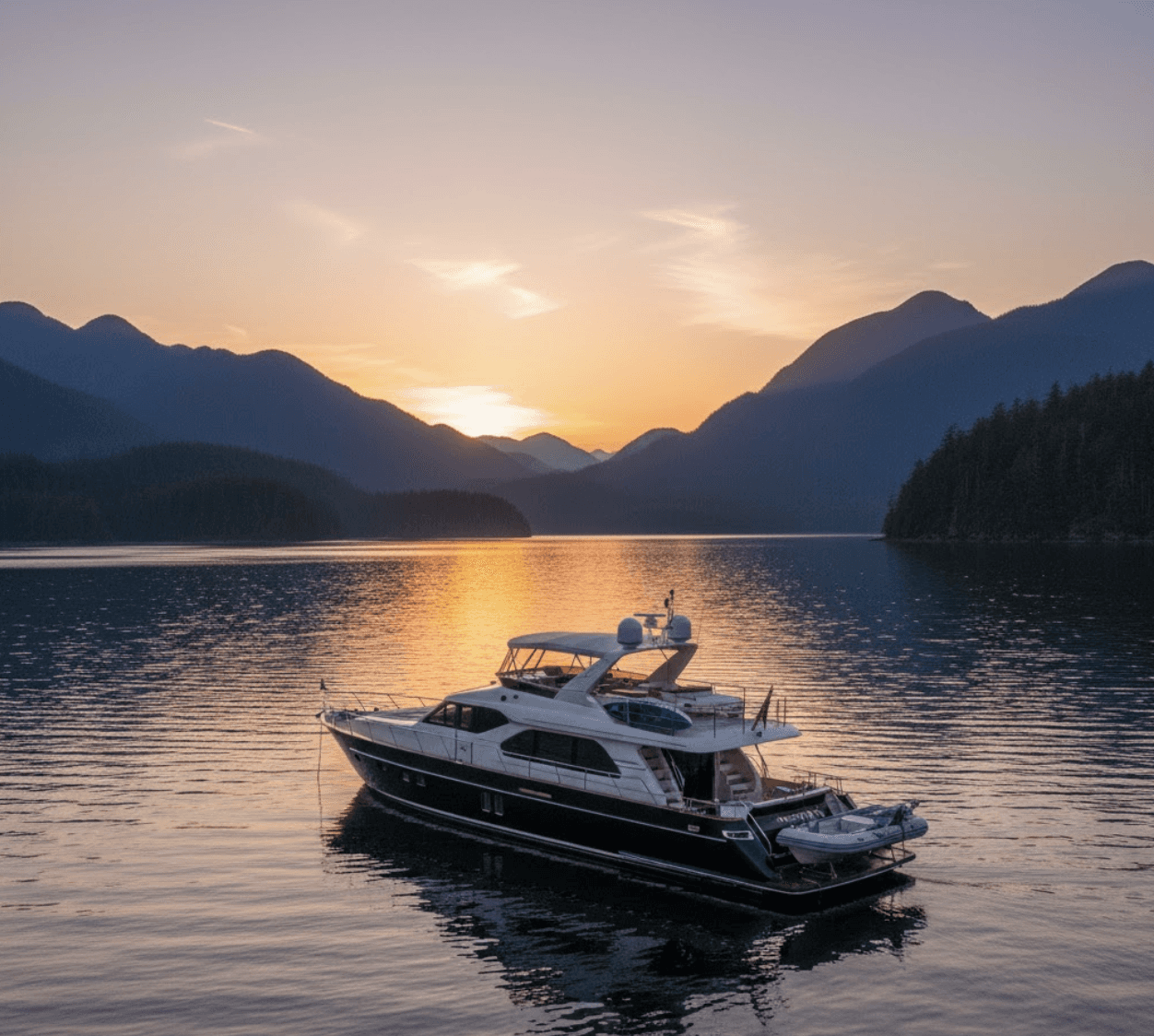
Picture this: you're anchored in after a long day of cruising. The water looks calm, but your boat is rocking side to side. Dinner plates slide across the table. Your guests look green. The night ahead promises little sleep and plenty of discomfort.
This scenario plays out thousands of times each season on British Columbia's waters. Boat roll is more than just an inconvenience. It causes seasickness, fatigue, and anxiety. It turns what should be a relaxing experience into an endurance test. For yacht owners in Vancouver and throughout BC, the question is not whether boat roll is a problem. The question is how to solve it.
Gyroscopic stabilizers have emerged as the leading solution for yacht owners who refuse to compromise on comfort. At Intrepid Marine Solutions, we have installed dozens of these systems on vessels throughout the BC coast. As the only internationally recognized Seakeeper and Seakeeper Ride dealers and installers in British Columbia, we have seen firsthand how this technology transforms the boating experience. This guide will explain what gyroscopic stabilizers are, how they work, and why they may be the perfect upgrade for your vessel.
What Are Gyroscopic Stabilizers and How Do They Work?
The Science Behind the Stability
A gyroscopic stabilizer uses a rapidly spinning flywheel to counteract boat roll. The system is elegantly simple in concept but sophisticated in execution. The flywheel spins at high speeds, with some units reaching up to 9,750 revolutions per minute (Seakeeper, 2024). This creates angular momentum, a powerful force that resists changes in orientation.
When your boat begins to roll, the gyroscope tilts fore and aft in a motion called precession. This precession generates a counteracting force to port and starboard that opposes the roll (Seakeeper, 2024). The physics are the same as those used in Control Moment Gyroscopes on the International Space Station (Boats.com, 2024).
The stabilizing torque is perfectly synchronized with vessel roll because it is created by the rolling motion itself (VEEM Marine, 2022). There is no delay between the wave-induced roll and the stabilizing response. This results in smooth, continuous stability that feels natural rather than jerky.
Key Technology: Vacuum Encapsulation
The breakthrough that made gyroscopic stabilizers practical for recreational vessels is vacuum encapsulation. Modern systems enclose the spinning flywheel in a near-vacuum sphere. This innovation allows the flywheel to spin three times faster, reduces weight by two thirds, and cuts power requirements in half compared to air-cooled designs (Seakeeper, 2024).
The vacuum also protects critical components from the harsh marine environment, preventing corrosion and extending service life (Seakeeper, 2024). This means less maintenance and more time on the water.
Real Performance: Roll Reduction You Can Feel
The Numbers Speak for Themselves
Gyroscopic stabilizers deliver remarkable performance. These systems can reduce boat roll by 70 to 95 percent (Boats.com, 2024). VEEM Marine reports their stabilizers achieve up to 95 percent roll reduction even in rough sea conditions (VEEM Marine, 2025).
Real-world testing confirms these claims. A test on a Contender 35 demonstrated that a Seakeeper unit knocked out 90 percent of the rocking and rolling (Boats.com, 2024). This level of performance works at all speeds, from anchored to full throttle.
Health and Comfort Benefits
The impact on seasickness is dramatic. Research shows that when stabilizers eliminate 80 percent of roll, only about 10 percent of people onboard will experience motion sickness symptoms. Without stabilization, that number jumps to 70 percent in the same conditions (Sleipner Group, 2025).
Beyond preventing seasickness, gyroscopic stabilizers enhance safety by creating a more stable platform. Reduced rolling means less risk of slips and falls. Crew can move around the vessel confidently. Children and elderly passengers feel secure. The entire experience becomes more enjoyable for everyone aboard.
Why BC Boat Owners Need Gyroscopic Stabilizers
British Columbia's 26,700 kilometres of coastline presents unique challenges (AHOY BC, 2024). The waters west of Vancouver Island face the full force of the Pacific Ocean. Seas can be rough any time of year (AHOY BC, 2024). Even protected areas like the Inside Passage experience strong currents and sudden weather changes.
Rolling ocean swells characterize the west coast experience. The Pacific Ocean frequently challenges even experienced mariners (AHOY BC, 2023). For yacht owners who cruise to popular destinations like Desolation Sound, the Gulf Islands, or up the Inside Passage to Alaska, gyroscopic stabilizers provide comfort and confidence in varying conditions.
At anchor, where fin stabilizers offer limited help, gyroscopic systems truly shine. They work at zero speed, making overnight stays peaceful and comfortable (Smartgyro, 2025).
Installation and Cost: What to Expect
Space and Power Requirements
One advantage of gyroscopic stabilizers is installation flexibility. These systems can be mounted virtually anywhere aboard with no ventilation requirements for vacuum-sealed units (Seakeeper, 2024). Most installations place the unit in the engine room, but options exist for under-seat mounting or other locations.
Power requirements are modest. The smallest Seakeeper 1 runs on 12V DC power and consumes 55 amps (Engineering Institute of Technology, 2021). Larger units require more power but remain efficient relative to their stabilization output.
The units do require structural support. Effective installations need the gyroscope weight to represent approximately 3 to 5 percent of vessel displacement (Wikipedia, 2025). Professional installation ensures proper mounting to hull stringers and structural reinforcement where needed.
Investment Breakdown
Gyroscopic stabilizer pricing varies by vessel size. For boats 23 to 30 feet, the Seakeeper 1 retails at $16,900 (Seakeeper, 2025). Mid-sized vessels from 30 to 50 feet typically invest $50,000 to $100,000 (Australian Marine Sales, 2025).
Installation adds $5,000 to $20,000 depending on vessel complexity and required modifications (Australian Marine Sales, 2025). The average total cost for a Seakeeper 1 installation is approximately $31,000 (Triseakeeper).
While the investment is significant, the value is undeniable. Improved comfort, reduced seasickness, enhanced safety, and increased vessel resale value all contribute to long-term benefits that outweigh initial costs.
Gyroscopic vs. Fin Stabilizers: Making the Right Choice
Both gyroscopic and fin stabilizers reduce roll, but they work differently. Gyroscopic systems offer key advantages for BC cruisers. They require no hull penetrations, eliminating leak risks and preserving hull integrity (Smartgyro, 2025). There are no external appendages to foul on nets, lines, or debris.
Gyroscopic stabilizers excel at zero speed and low speeds, making them ideal for anchorage comfort (Smartgyro, 2025). They work across the entire speed range without the dead zones that affect some fin systems. Installation is simpler with no frame penetrations or complex hydraulic systems required (VEEM, 2021).
The trade-off is spin-up time. Gyroscopic units require 30 to 45 minutes to reach operating speed, while fins work instantly. For vessels that spend extended periods at anchor or cruise at displacement speeds, gyroscopic systems offer superior performance.
Key Takeaways
Gyroscopic stabilizers reduce boat roll by 70 to 95 percent using spinning flywheel technology and vacuum encapsulation (Boats.com, 2024)
These systems dramatically reduce seasickness, with only 10 percent of passengers experiencing symptoms compared to 70 percent on unstabilized vessels (Sleipner Group, 2025)
Installation requires 3 to 5 percent of vessel displacement in weight and modest electrical power starting at 55 amps for small units (Wikipedia, 2025; Engineering Institute of Technology, 2021)
Total investment ranges from $31,000 for small vessels to over $150,000 for larger yachts, including installation (Triseakeeper; Australian Marine Sales, 2025)
As BC's only internationally recognized Seakeeper dealers and installers, Intrepid Marine Solutions brings certified expertise to every installation
Continue Reading
Explore ideas, trends, and behind-the-scenes stories from our studio.